


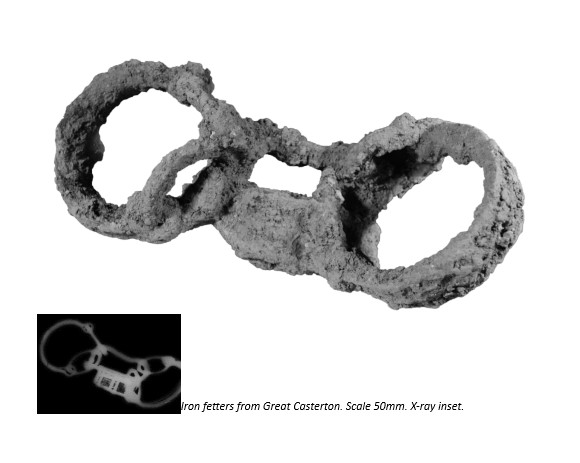
A unique burial, thought to be rare evidence of slavery in Roman Britain, has been discovered in a garden in Great Casterton.
A 1600 year old skeleton of a man found during excavation work in Great Casterton has revealed unique evidence of slavery in Roman Britain. The remains were found by builders working on a house extension. Archaeologists were called and discovered something never seen before in this country – that the man had been shackled before he died. The skeleton, which has been radiocarbon dated to between AD 226 to 427, is now recognised to be an internationally significant find and the results have been published this week in the journal Britannia.
Michael Marshall from the Museum of London Archaeology was one of those who has been examining the remains and he spoke to Rutland and Stamford Sound:
“It’s really, really exciting”, says Michael, “It’s a fantastic insight into the Roman period and the first time a burial bearing these type of shackles has ever been found in Britain. It’s also an opportunity to learn more about how the Romans treated the dead. We know that slaves were an important part of Roman society but while some of these people would have been shackled they [usually] wouldn’t have been buried wearing them.”
 Weekend sports round up